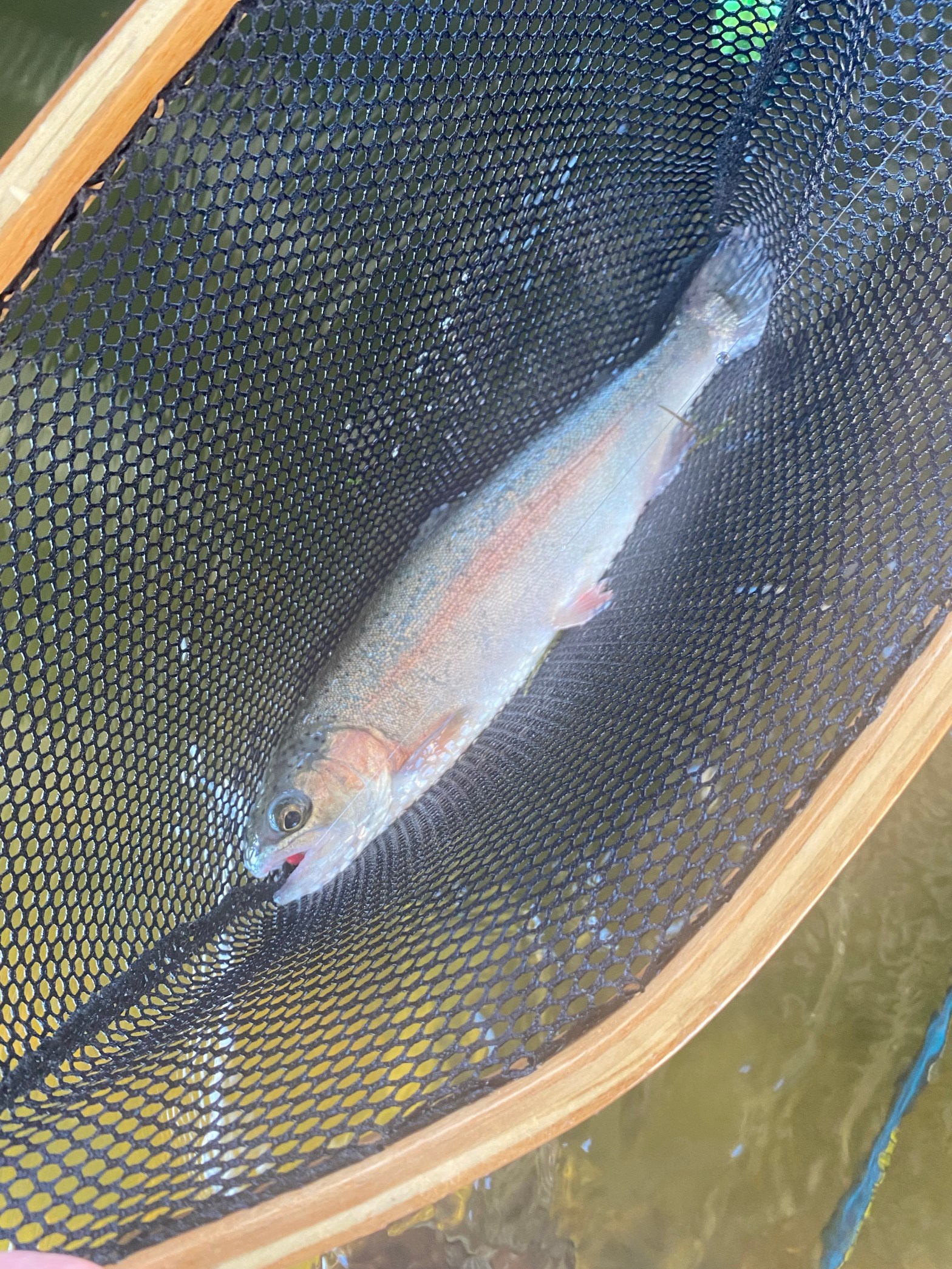
If you’re like me every year you look forward to when they stock The Lower Salt River with trout every year.
Each year around fall they lower the water level in The Lower Salt River in order to fill the reservoirs.
The water flow goes from about 1100 cubic feet per second down to as low as 8 CFS. You can look up the current water flow on the USGS website.
For the Salt River your basic 9 foor 5 weight rod will handle anything you encounter. Personally I have been using my redington rod and reel.
You can check out my bait fishing for trout article or my article on using lures for trout.
My strategy changes up a little based on whether or not they just stocked the river.
I’ve been there and they’ve dumped the trout truck right in front of me and I had schools of trout swimming around my legs.
Most of what I do in the Salt River involves the dead drift method in one way or another.
If the trout were just stalked I’ll try out a few different colored Glo-bugs.
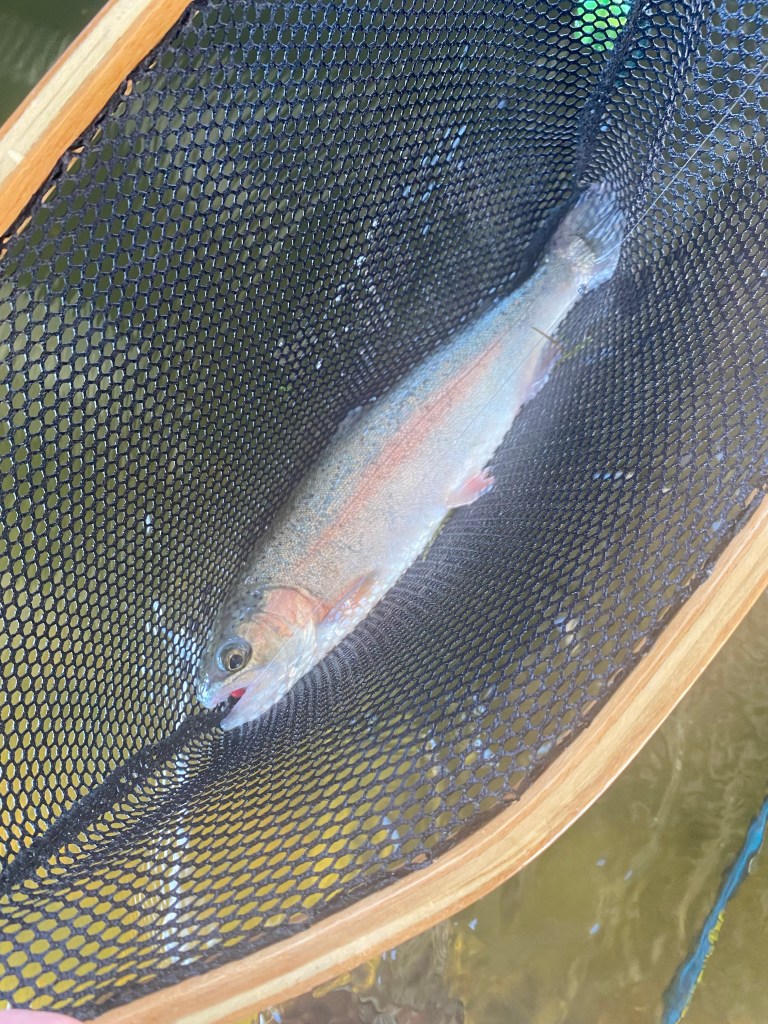
I’ll tie these on a 6x tippet with just a tiny split shot to take it below the surface.
With this set up many anglers find it easier if they use a strike indicator as well. It lets you see what you can’t feel since there will be slack in the line.
Cast up river at an angle and just let your line drift down with the current. It’s important to periodically mend the line so that the river isn’t pulling your lure making it appear unnatural.
The other technique I employ if the fish have been there for a few days as they become more wild is to dead drift a nymph or dry fly.
When picking a fly I always try to match the hatch. Look around and see what bugs are landing on the water and often you’ll see trout surfacing to eat them.
If you see the trout surfacing to eat flies then use a dry fly that matches the flies on the river at that time.
Put a little bit of floatant on the fly to keep it on the surface. I personally use Gink. It’s easy to use and they make nifty carriers to go on your vest.
Once again yoou’re going to cast up river and let the fly drift down with the current.
Try casting and letting the fly drift down different parts of the river.
You will have a much better experience if you bring waders so you can get out in the water closer to the fish and not compete with everyone on the shore.
I actually found a really cheap decent pair on amazon. You can get them here, but I really prefer my nicer pair but they aren’t necessary you can see them here if you’re interested.
Nymphing works great in the Lower Salt River. What I like to do is tie a dry fly on with some gink on it and then tie a nymph about 24 inches below it.
This allows the nyph to bounce along the bottom and the dry fly acts like an indicator that also catches fish.
If the water is very fast and white I’ll skip the dry fly in favor of a strike indicator.
I’ll just use this method 90% of the time on the Salt River and it tends to be the easiest method by far.
As far as fly selection I’ll usually buy a variety of size 12-18 of both dry flies and nymphs.
As the season progresses I’ll see what is working and match the hatch and start buying individual flies that are more fitting, but to start the season I always just buy a variety and have fun.
Sometimes the fly you thought would never work ends up working like a charm.
If you’re here locally I recommend buying individual flies from Sportsmans warehouse. They’re close by in mesa and have the best deals in the area.
Make sure to have fun on the Salt River and pick up after yourself. Also you might get lucky and see the wild mustangs roaming the river banks. They’re harmless as long as you stay out of their way.
Disclaimer: I only recommend products I have used and truly would use again. Some of the links on this site are affiliate links and may result in me getting a commission though they don’t affect my reviews.
 The Rocky Outdoorsman